Turfing and new lawns in Teesside
New turf supplied and laid on Teesside costs £8 to £16 per square metre including ground preparation, so £1,200 to £2,400 for a typical 150m² garden. Most of that price is the preparation underneath, which is also what decides whether the lawn is still good in three years.
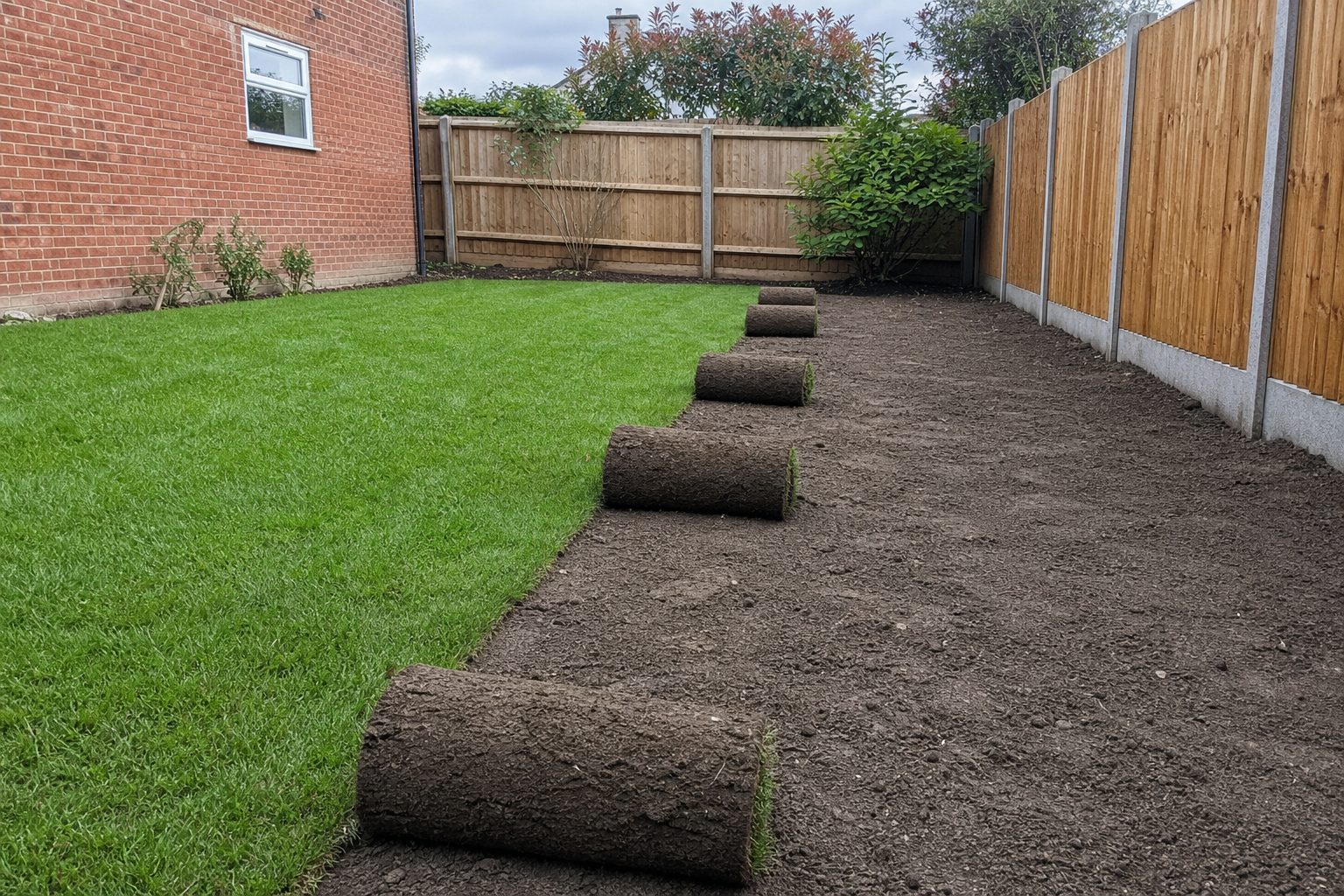
When turf is the right answer
Turf makes sense in three situations: a brand new garden with no lawn at all, a lawn so far gone that under a third of it is grass, or a garden where levels are so poor that seed would never mow evenly. It is also the choice when a finished lawn is needed for a specific date, since turf looks like a lawn from day one and seed does not.
Where a lawn still has reasonable coverage, renovation and overseeding normally reaches the same place for a fraction of the price. A contractor who recommends turf on a lawn that is two thirds grass should be able to explain exactly why.
Preparation is the job
Rolling turf onto whatever is there is why so many new lawns fail by year two. Proper preparation on Teesside's clay means clearing the old surface, rotavating or breaking up the compacted layer beneath, importing topsoil where the existing depth is thin, grading to a fall that moves water away from the house, consolidating the surface so it does not settle into hollows, and raking to a fine tilth with a pre-turf fertiliser worked in. On the region's newer estates, where topsoil depth over builders' subsoil is often only 75 to 100mm, adding depth is usually the biggest single cost line.
Prices
| Element | Guide price | Notes |
|---|---|---|
| Turf supplied and laid | £8 to £16/m² | Includes standard preparation |
| Imported topsoil | £45 to £75 per tonne bag | Where existing depth is inadequate |
| Old lawn removal and disposal | £3 to £6/m² | Skip or grab hire on larger jobs |
| Levelling and regrading | Quoted per job | Depends on how much soil moves |
Choosing turf
Standard hard-wearing ryegrass turf suits nearly every Teesside family garden. Shade-tolerant grades are worth the premium for the enclosed back gardens of older terraced streets. Fine ornamental turf looks superb and needs mowing at 15 to 20mm twice a week to stay that way, which is a commitment rather than a purchase. Whatever the grade, turf should be laid within 24 hours of delivery, and rolls that have sat on a pallet in warm weather will already be yellowing inside.
The first six weeks
- Water heavily and daily for the first fortnight unless rain does it, lifting a corner to check moisture has reached the soil beneath, not just the turf.
- Stay off it until the roots have knitted, usually two to three weeks. Lift a corner: resistance means rooting.
- First cut at three weeks or so, blades sharp, height high, removing only the tips.
- Feed lightly around six weeks, then move onto a normal treatment programme the following season.
Best time to turf on Teesside
Turf can be laid almost year round, but autumn and spring are kindest: the soil is warm and moist, rooting is fast, and watering demands are modest. Summer laying works if you can genuinely commit to daily irrigation, and a hot July week on a sandy Redcar garden is unforgiving. Winter laying is possible on unfrozen, unsaturated ground, though rooting stalls until temperatures rise.