Overseeding and lawn renovation in Teesside
Overseeding thickens a thin lawn by sowing new grass into the existing sward, and on Teesside it costs £1 to £2 per square metre. Done in September, after scarifying and aerating, it is the cheapest way to turn a patchy lawn into a dense one without lifting a single roll of turf.
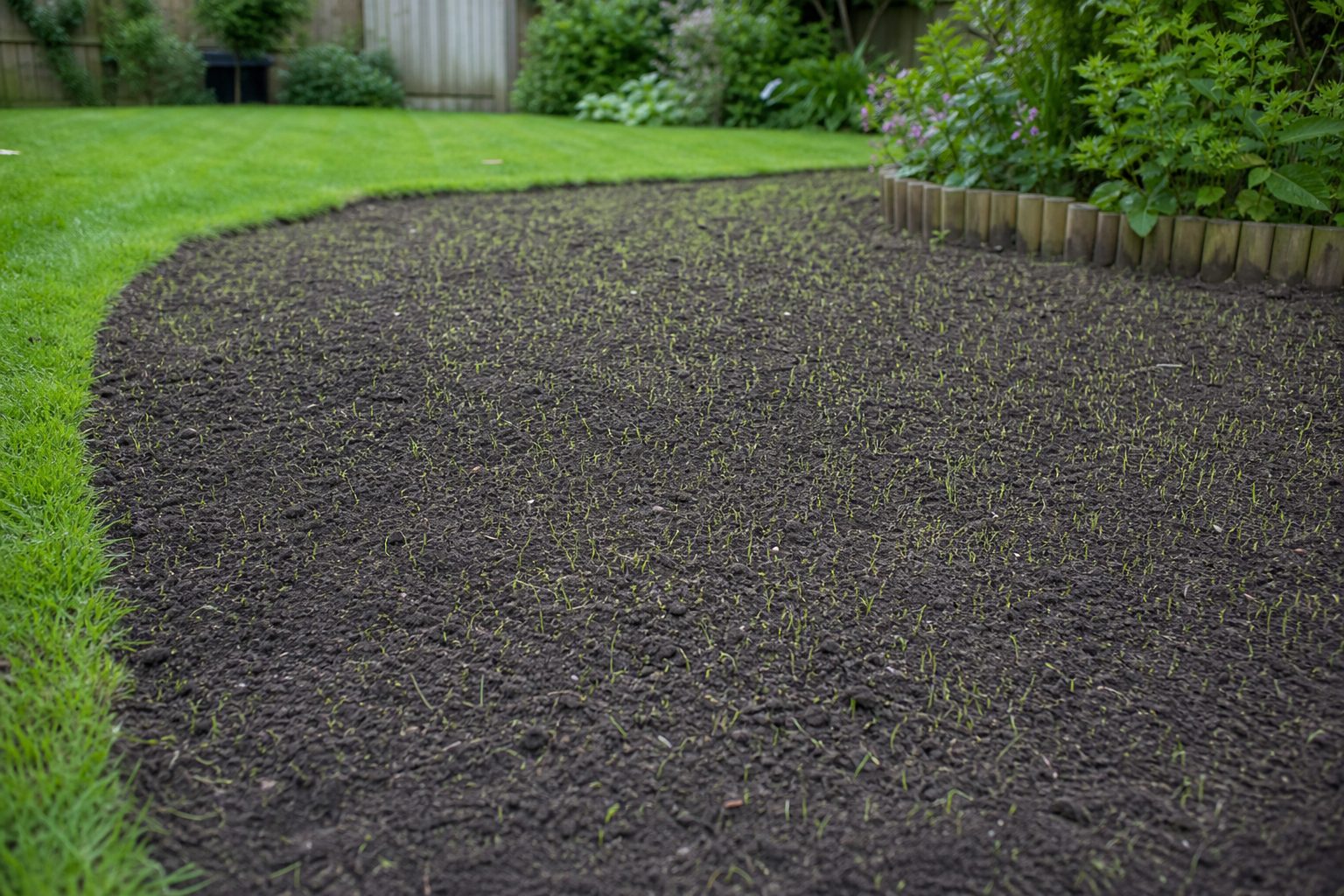
Density is the whole game
A lawn with 40 plants per square inch has no room for a dandelion seed to germinate. A lawn with 10 has plenty. Almost every weed and moss problem starts as a thinning problem, which is why overseeding is the most under-used and most cost-effective job in domestic lawn care. It also lets you change the composition of the lawn over time, gradually introducing cultivars better suited to shade, drought or a football-playing eight year old.
Choosing seed for a Teesside garden
- Perennial ryegrass blends for family lawns: quick to germinate, tough underfoot, the default for most gardens across Stockton, Billingham and Ingleby Barwick.
- Fescue-heavy shade mixes for the high-walled, north-facing back gardens of the older terraces in central Middlesbrough and Hartlepool, where ryegrass thins out year after year.
- Deep-rooting drought-tolerant blends for the free-draining sandy plots near Redcar, Marske and Seaton Carew that scorch first in a dry June.
- Fine ornamental mixes only where the lawn is genuinely decorative and mown short, because they will not take heavy wear.
Seed rate matters as much as seed type. Overseeding into existing turf is typically 25 to 35g per square metre; a full renovation on bare soil needs 35 to 50g. Sowing thinly to save a few pounds of seed on a 150m² lawn is a false economy that shows for two years.
The renovation sequence
Seed needs soil contact, light and moisture, and existing turf denies it all three. That is why overseeding is the last step of a sequence, not a standalone: treat moss, scarify to expose soil, aerate to open the root zone, sow, then top dress lightly with a sand and loam mix to hold moisture around the seed. Keeping the surface damp for the first two to three weeks is what decides the result, and a September sowing on Teesside usually gets that for free.
What it costs
Overseeding alone is £1 to £2 per square metre including seed. A combined autumn renovation of scarification, aeration, overseeding and top dressing typically works out at £4 to £7 per square metre, so £600 to £1,050 on a 150m² lawn. That sounds a lot beside a single treatment visit, and it is, but it is a fraction of the £8 to £16 per square metre that new turf costs, and it usually gets to the same place.
Germination timelines
| Stage | Timing | What to do |
|---|---|---|
| Germination | 7 to 14 days | Keep the surface damp, stay off the lawn |
| First mow | 3 to 5 weeks | Sharp blades, high setting, take a little off |
| Knitting in | 6 to 10 weeks | Light autumn feed, keep leaves cleared |
| Full establishment | Following spring | Resume normal treatments and use |
When overseeding is the wrong call
If the lawn is under about a third grass, if it is riddled with coarse creeping weed grasses, or if the levels are so uneven that mowing scalps half of it, seed into the existing surface will disappoint. Full renovation with rotavation and relevelling, or turf, is the honest recommendation, and it is worth asking any quoting contractor to be blunt about which category your lawn falls into.